Brain Development Tools: Enhancing Cognitive Function
Reflex Integration
Reflex Integration
Reflex Integration
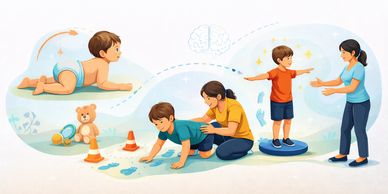
Primitive reflexes are automatic movement patterns we are born with. They help babies survive and develop — but they are meant to fade as the brain matures. If reflexes remain active beyond infancy, they can affect balance, coordination, attention, posture and emotional regulation.
Reflex integration uses specific movement patterns and sensory input to help the brain “complete” these early developmental stages. As reflexes integrate, we often see improvements in stability, focus, motor skills and confidence.
Photobiomodulation
Reflex Integration
Reflex Integration

Photobiomodulation (PBM) uses safe red and near-infrared light to support cellular energy production in the brain. By helping brain cells function more efficiently, PBM can support regulation, focus, processing speed and recovery. We use targeted left/right protocols based on individual assessment findings.
Rezzimax Tuners
Reflex Integration
Balance Activities

The Rezzimax Tuner delivers gentle targeted vibration to specific areas of the body, particularly around the head, neck and jaw. This type of input helps stimulate cranial nerves and calm the nervous system. It can support regulation, focus and stress recovery by helping the brain shift out of “fight or flight” mode.
Balance Activities
Interactive Metronome
Balance Activities

Balance activities stimulate the vestibular system — the brain’s movement and spatial awareness centre. Improving balance strengthens brain-body communication, supports postural control and enhances focus and regulation.
Interactive Metronome
Interactive Metronome
Interactive Metronome

Interactive Metronome (IM) is a timing and rhythm-based training system. It strengthens communication between different brain regions by improving timing accuracy. Better timing supports attention, coordination, processing speed and learning efficiency.
Vibration Plates
Interactive Metronome
Interactive Metronome

Vibration plates provide controlled, low-level vibration through the feet and body. This sensory input activates muscles, supports postural stability and stimulates the cerebellum (the brain’s coordination centre). It’s a powerful way to strengthen foundational brain-body communication.
qEEG Scan
Forbrain Training
Forbrain Training
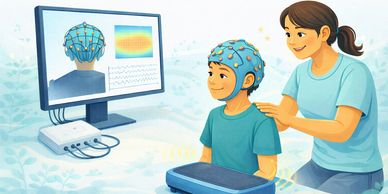
A qEEG (quantitative electroencephalogram) is a non-invasive brain scan that measures electrical activity in different regions of the brain. It helps us understand how balanced the left and right sides are and where areas may be overactive or underactive. This gives us objective information to guide personalised programs.
Forbrain Training
Forbrain Training
Forbrain Training
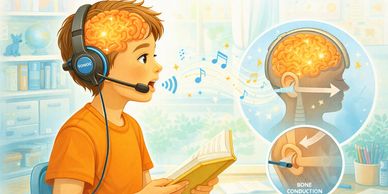
Forbrain is a specialised bone-conduction headset that enhances how the brain processes sound and speech. When a child speaks while wearing it, their voice is filtered and sent back through bone conduction, strengthening the auditory feedback loop. This targeted stimulation supports attention, language processing, speech clarity and verbal memory by helping the brain become more aware of how it hears and produces sound.
TENS Machines
Forbrain Training
Soundsory Headphones
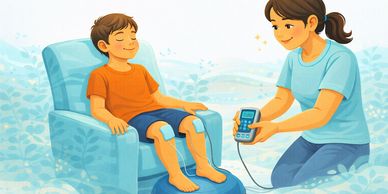
TENS (Transcutaneous Electrical Nerve Stimulation) delivers gentle electrical stimulation to specific muscles or nerve pathways. In the Brain Room, this input can support sensory activation, muscle engagement and targeted neurological stimulation as part of a broader functional program.
Soundsory Headphones
Soundsory Headphones
Soundsory Headphones

Soundsory headphones deliver specially designed music that combines rhythm and filtered sound to stimulate the auditory and vestibular systems. This structured listening program helps strengthen timing, coordination, balance and attention by improving how the brain processes sound and movement together. It’s a simple but powerful way to support regulation and sensory integration.
CLA Scan
Soundsory Headphones
CLA Scan
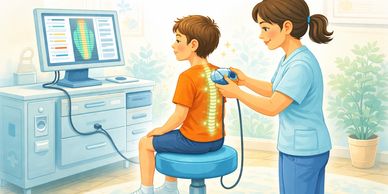
A CLA (Computerised Linear Analysis) scan is a gentle, non-invasive assessment that measures subtle patterns of tension and alignment along the spine. Because the spine protects the nervous system, changes in spinal balance can influence how the brain and body communicate. The scan provides objective information that helps guide personalised care and monitor progress over time.